



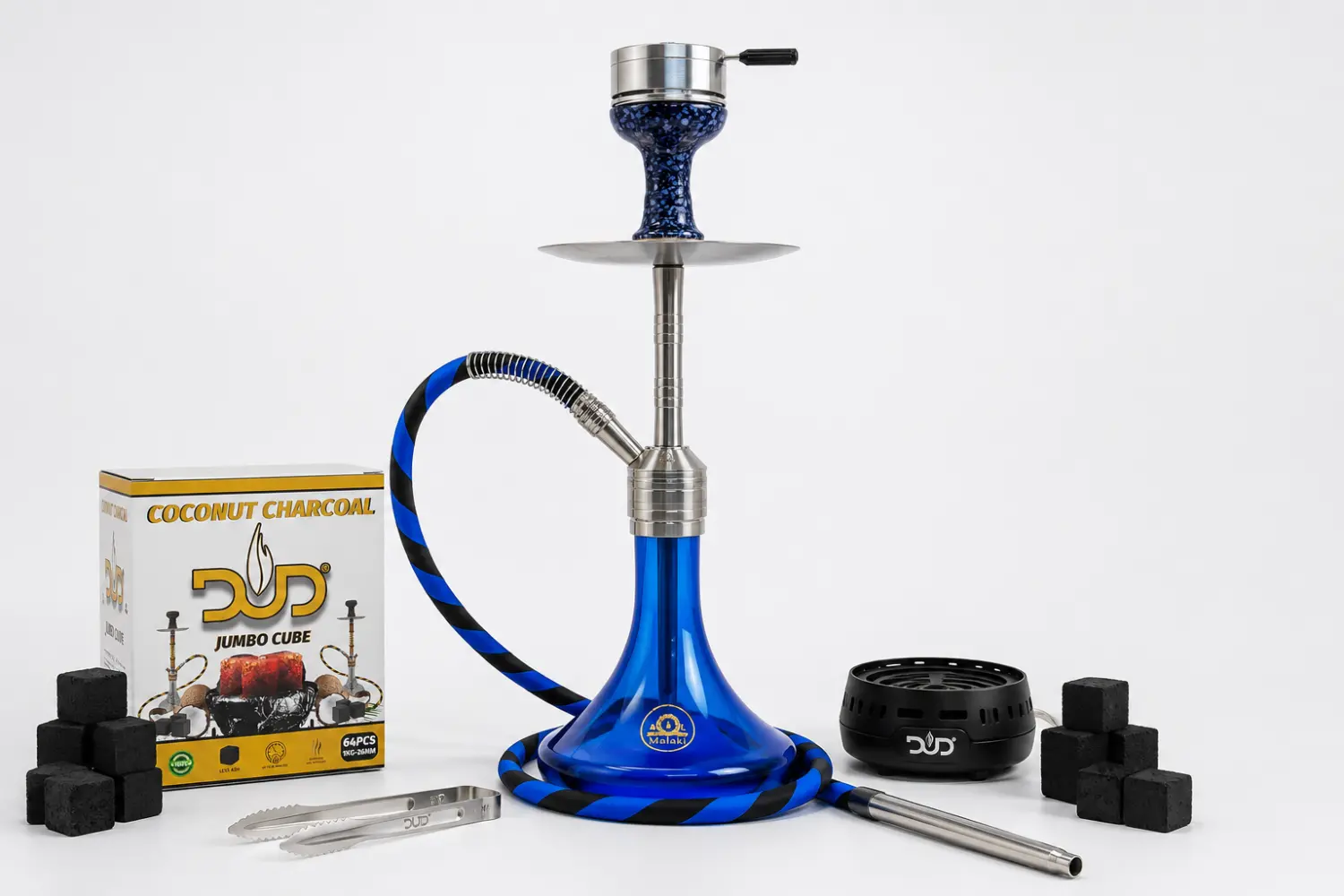
Originating centuries ago, the hookah has evolved from a regional cultural tradition into a global social activity. Known variously as a water pipe, narghile, argileh, or shisha pipe depending on the region, this device offers a distinct smoking experience centered around flavored tobacco and water filtration. For those new to the practice, setting up and operating a hookah can seem complex due to the multiple components involved. This guide breaks down the mechanics, anatomy, and choices involved in starting your hookah journey.
Is Hookah the Same as Shisha?
The words "hookah" and "shisha" are often used interchangeably, particularly in Western countries, but they have distinct meanings in traditional contexts. Understanding this terminology is the first step for any beginner.
- Hookah: The complete physical water-pipe device, including the stem, base, hose, and bowl.
- Shisha: The actual tobacco mixture placed inside the bowl. This is typically a wet, sticky blend of tobacco leaves, molasses, honey, glycerin, and fruit flavorings.
- Hookah Bowl: The clay, ceramic, or silicone container at the top of the pipe that holds the shisha.
- Hookah Charcoal: The specially manufactured coal blocks used as the heat source to bake the shisha.
In some Middle Eastern and North African countries, the word "shisha" refers to the pipe itself, while the tobacco is called "mu'assel." However, in most retail environments globally, keeping these definitions separate will help you purchase the correct equipment and consumables.
| Term | Definition | Role in Setup |
|---|---|---|
| Hookah | The water pipe apparatus | Acts as the structural delivery system for the smoke. |
| Shisha | The flavored tobacco mixture | Provides the flavor, aroma, and nicotine. |
| Bowl | The top-mounted container | Holds the shisha and supports the heat source. |
| Charcoal | The heat source | Bakes the shisha to produce vapor and smoke. |
How Does a Hookah Work?
A hookah operates through basic physics, utilizing heat, vacuum pressure, and water filtration. The process follows a specific sequence of airflow:
- Packing the Bowl: Flavored shisha is packed loosely into the hookah bowl to allow air to circulate through the tobacco leaves.
- Applying Heat: The bowl is covered with punctured aluminum foil or topped with a metal heat management device (HMD). Fully lit, red-hot charcoals are placed on top.
- Creating a Vacuum: When a user inhales through the hose mouthpiece, they draw air out of the sealed glass base, creating a partial vacuum in the empty space above the water.
- Drawing the Smoke: To equalize the pressure, hot air from the coals is pulled down through the bowl. This hot air bakes the shisha, vaporizing the glycerin and tobacco juices to create thick smoke.
- Water Filtration and Cooling: The smoke travels down the central stem and exits through the submerged downstem into the water. As it bubbles through the water, the smoke is cooled and filtered of heavy ash particles.
- Inhalation: The cooled smoke rises into the empty chamber of the base and is drawn through the hose port, into the hose, and to the user.
It is vital to note that while water filtration cools the smoke and makes it smoother to inhale, it does not make tobacco smoke harmless. Nicotine, carbon monoxide, and toxic compounds remain present in the inhaled vapor.
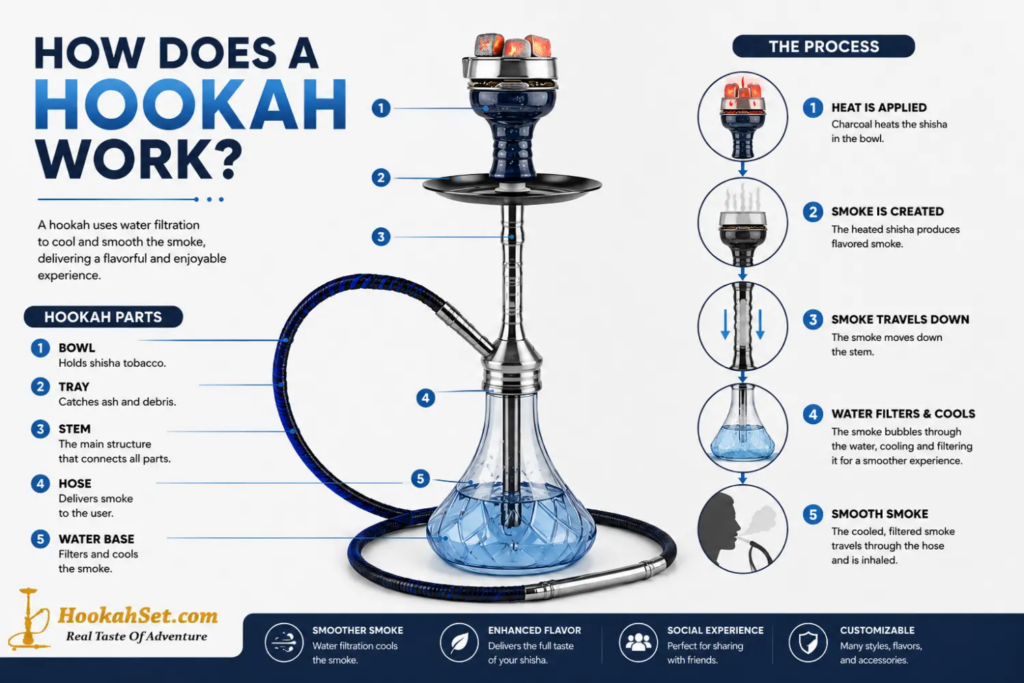
Anatomy of a Hookah: The Core Components
A standard hookah consists of several modular parts that must fit together with airtight seals to function properly.
1. The Hookah Bowl
Positioned at the very top of the pipe, the bowl holds the shisha tobacco. Clay and ceramic are the most popular traditional materials due to their excellent heat retention and distribution. Modern bowls may also be made of heat-resistant silicone or thermal glass. Common styles include Egyptian bowls (with holes at the bottom) and Phunnel bowls (with a single raised central spire that prevents juices from dripping down the stem).
2. The Hookah Tray
This metal plate sits directly below the bowl. Its primary function is safety: it catches falling ash or loose charcoal and provides a heat-resistant surface to place hot coals temporarily while adjusting the heat of your session.
3. The Hookah Stem and Downstem
The stem is the central metal column of the pipe. The upper portion connects the bowl and tray, while the lower portion, known as the downstem, extends down into the water base. Stainless steel and brass are preferred materials for stems because they resist corrosion, do not retain ghost flavors from previous sessions, and are easy to clean.
4. The Hookah Base
The base is the bottom jar that holds the water. Usually made of glass or acrylic, the base must be heavy and stable enough to support the weight of the stem and prevent the hookah from tipping over. Bases connect to the stem via rubber grommets, threaded screws, or modern click-lock mechanisms.
5. The Hookah Hose and Mouthpiece
The hose is the flexible tube through which the smoke is drawn. Modern setups utilize medical-grade silicone hoses because they are flexible, durable, and fully washable. Traditional hoses made of leather and internal metal coils cannot be washed, as water will cause the inner coils to rust and ruin the hose.
6. The Purge Valve
Located on the stem chamber, the purge valve contains a small ball bearing. When you inhale, the bearing seals the valve to keep the system airtight. When you gently blow into the hose, the bearing lifts, allowing stale or overheated smoke to escape from the base chamber.
7. Grommets (Seals)
Grommets are rubber or silicone rings placed at connection points (between the bowl and stem, stem and base, and hose and stem). These seals prevent air leaks, which are the most common cause of thin, wispy smoke.
Types of Hookahs: Traditional vs. Modern
When choosing a hookah, you will generally find two design philosophies: traditional and modern.
Traditional Hookahs
Traditional hookahs are often handmade in countries like Egypt, Turkey, or Syria. They feature heavy brass, copper, or stainless steel stems with ornate engravings, hand-blown glass bases, and classic grommet connection systems. They offer a classic aesthetic and a distinct, rumbling draw, but they require regular polishing to maintain their appearance.
Modern Hookahs
Modern hookahs utilize industrial manufacturing, clean lines, and advanced materials. They often feature anodized aluminum or surgical-grade stainless steel, built-in adjustable diffusers (which quiet the bubbling sound and smooth the draw), magnetic hose connectors, and click-lock base connections that eliminate the need for rubber grommets.Maintenance
| Feature | Traditional Hookahs | Modern Hookahs |
|---|---|---|
| Materials | Brass, copper, cast iron, hand-blown glass | Stainless steel, carbon fiber, acrylic, silicone |
| Connections | Push-fit rubber grommets | Threaded, click-lock, or magnetic joints |
| Draw Style | Restricted, classic rumble | Open, smooth, often adjustable with diffusers |
| Requires regular polishing; prone to flavor ghosting | Highly rust-resistant; dishwasher-safe components |
Essential Accessories: Charcoal and Heat Management
A complete hookah setup requires specific consumables and tools to manage heat effectively.
Quick-Light vs. Natural Charcoal
The choice of charcoal directly impacts the flavor and duration of your session:
- Quick-Light Charcoal: Coated with a chemical accelerant, these circular tablets can be lit with a standard pocket lighter in under a minute. While convenient for travel, they burn at a lower temperature, last only 30 to 45 minutes, and can introduce a chemical taste to the smoke.
- Natural Coconut Charcoal: Made from compressed coconut shells, these odorless cubes contain no chemical additives. They require an electric coil burner to light fully (taking 8 to 12 minutes) but burn hotter, last up to 90 minutes, and do not interfere with the flavor of the shisha.
Foil vs. Heat Management Devices (HMDs)
To transfer heat from the coals to the tobacco, you must separate them using one of two methods:
- Hookah Foil: Heavy-duty aluminum foil is wrapped tightly over the packed bowl and pierced with small holes. Coals are placed directly on top. This method requires active heat management, meaning you must manually rotate the coals to prevent the tobacco from burning.
- Heat Management Devices (HMDs): These metal chambers sit directly on top of compatible bowls. You place the hot coals inside the HMD, which regulates heat distribution through adjustable vents. This reduces direct ash contact with the shisha and provides a more consistent, user-friendly experience.
Practical Tips for Hookah Beginners
To ensure a successful first session, pay close attention to water levels, setup preparation, and cleaning protocols.
How Much Water Goes in a Hookah Base?
The water level inside the glass base is critical for proper airflow. As a general rule, the bottom of the downstem should be submerged approximately 1 inch (2.5 cm) below the surface of the water.
- Too much water: Restricts the airflow, making it difficult to draw smoke through the hose, and increases the risk of water bubbling up into the hose.
- Too little water: Prevents the downstem from making a complete seal, meaning the smoke will not filter through the water, resulting in hot, harsh, and unfiltered inhalation.
How to Clean Your Hookah
Regular cleaning prevents residue buildup and "ghosting"—the lingering taste of previous flavors during a new session. Follow these steps after your hookah has cooled completely:
- Rinse the Base: Empty the water after every session. Rinse with warm water and use a specialized base brush to scrub away residue.
- Clean the Stem: Run warm water through the stem and scrub the interior walls with a long-shafted stem brush.
- Wash the Hose: If using a washable silicone hose, run warm water through it for a few minutes and hang it vertically to dry. Do not wash non-washable traditional hoses.
- Dry Thoroughly: Allow all parts to dry completely before reassembling or storing the hookah to prevent mold or mineral deposits.
Safety Warning: Never expose a hot glass base or ceramic bowl to cold water. Sudden temperature shifts can cause the glass or ceramic to crack or shatter.
Frequently Asked Questions
Does a hookah need water to function?
Yes. Water is essential to create the necessary seal and bubble action that cools the hot smoke before it reaches your lungs. Operating a hookah without water will result in inhaling hot, harsh, and uncooled tobacco smoke.
Does the size of the hookah affect the smoke quality?
No. While larger hookahs offer more stability and are ideal for social settings, a small, well-sealed portable hookah can produce the same volume and quality of smoke. Airflow, airtight seals, bowl packing, and heat management are far more important to performance than total height.
Why is my hookah not bubbling?
If your hookah is not bubbling, check for air leaks. Ensure the water level covers the downstem by one inch, verify that all rubber grommets are tightly fitted, and check that the ball bearing inside the purge valve is not stuck or missing.
Why is the draw on my hookah so difficult?
A tight or restricted draw is usually caused by overpacking the bowl (blocking the airflow holes), having too much water in the base, or using a hose with a narrow interior diameter.

Tech Reviewer & Vape Enthusiast
Rohan Sharma is a dynamic and analytical voice in the Indian vaping landscape, blending his passion for technology with a deep understanding of the global vape market. Based in Bangalore, India's tech hub, Rohan leverages his IT background to dissect the intricate details of vaping devices, from chipset performance to coil longevity. His content aims to empower the growing Indian vaping community with precise, data-driven reviews and practical advice.