




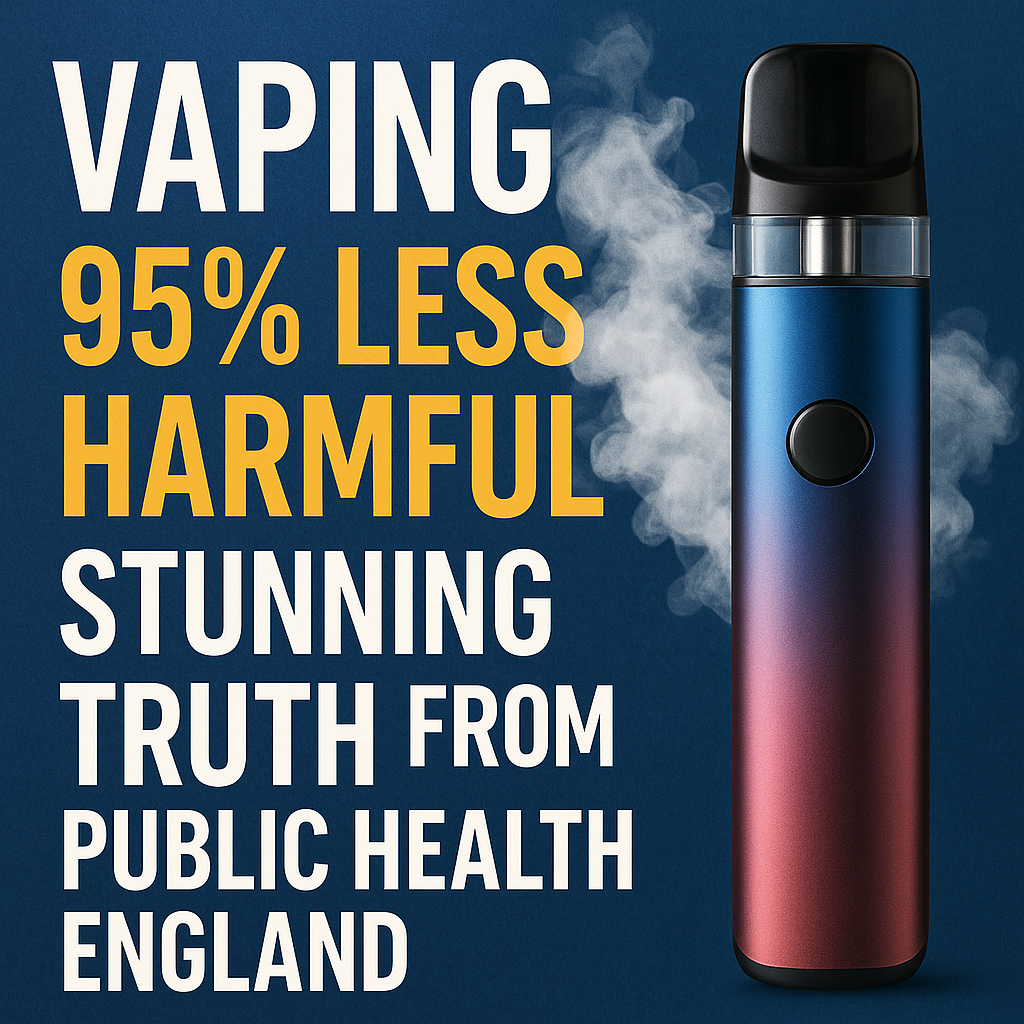
According to Public Health England, vaping is 95% less harmful than smoking combustible tobacco. Electronic cigarettes heat nicotine liquids without burning tobacco leaves, eliminating tar, carbon monoxide, and thousands of toxic chemicals. Adult smokers who switch completely to e-cigarettes cut carcinogen exposure and lower tobacco disease risks.
- Harm Reduction Figure: Public Health England found e-cigarettes carry 95% less risk than combustible cigarettes.
- Combustion Removed: Vaporizing liquid eliminates tar and carbon monoxide found in tobacco smoke.
- Youth Risk Findings: Agency reviews found no evidence that vaping drives non-smokers into tobacco use.
Public Health England (PHE) concluded that electronic cigarettes are 95% less harmful than traditional cigarettes. According to the agency's evidence review, adult smokers can switch to vaping to reduce health risks without abandoning nicotine completely.
Smoking remains a leading cause of preventable death worldwide. Health authorities encourage adult smokers who struggle with standard cessation methods to transition away from burning tobacco.
Scientific Basis Behind the 95% Harm Reduction Figure
PHE based its conclusion on scientific evidence comparing vaping risks against combustible tobacco. Traditional cigarettes burn tobacco leaves and produce smoke containing thousands of harmful chemicals linked to cancer, respiratory disease, and heart problems.
Electronic cigarettes heat a liquid solution of nicotine, flavorings, and additives into vapor. Avoiding combustion eliminates tar and carbon monoxide while sharply cutting exposure to dangerous toxins.
Health Outcomes for Smokers and Public Misconceptions
Adult smokers who switch entirely from cigarettes to vaping lower their risk of smoking-related diseases. PHE treats vaping as a harm reduction tool for adults who struggle to quit using approved therapies.
Misinformation often claims vaping equals smoking in danger or leads youth into tobacco use. According to PHE reviews and subsequent studies, current evidence does not show vaping is a major risk factor for non-smokers or young people starting nicotine.
Product Regulation and Public Education Standards
Effective tobacco harm reduction depends on clear government regulation and public education. Regulators must enforce product safety standards and ensure marketing never targets minors or non-smokers.
Science-based policies encourage adult smokers to switch to safer alternatives while authorities continue long-term industry monitoring. Wider adoption of evidence-based harm reduction can save lives and ease healthcare burdens tied to tobacco.
Frequently Asked Questions
-
Does Public Health England consider vaping completely safe?
No. According to Public Health England, vaping is 95% less harmful than smoking, though e-cigarettes still carry residual health risks. Avoiding combustion removes tar and carbon monoxide, while nicotine remains addictive. Health officials advise non-smokers against vaping while guiding adult smokers toward switching.
-
Why are e-cigarettes less toxic than traditional cigarettes?
Traditional cigarettes burn tobacco leaves and generate smoke packed with thousands of toxic chemicals and carcinogens. Electronic cigarettes heat a nicotine liquid into vapor without burning tobacco. Avoiding combustion eliminates tar, carbon monoxide, and most hazardous substances responsible for cancer and lung damage.
Disclaimer: This content is intended for informational purposes for adult smokers and vapers (18+) only. Nicotine is an addictive chemical. Product availability and regulations vary by jurisdiction under local TPD and national laws.

